How We Built Our Own Translation Vendor Management Platform
Running a translation company involves much more than translating documents. Behind every project is a network of translators, interpreters, editors, project managers and specialist linguists working across languages, subject areas, countries and time zones.
As that network grows, spreadsheets, email threads and disconnected tools become harder to use as a reliable source of truth. At CauLingo, we reached the point where adapting a translation-company workflow to generic software made less sense than building software around how a translation company actually works.
That is why we built our own internal translation vendor management platform. It is operated on CauLingo-controlled server infrastructure as an internal production system—not as a public product or a replacement for professional judgment.
Why generic systems were not enough
A general recruitment system may focus on job title, experience and location. For a language-services company, that is only the beginning. We also need to understand language combinations, professional roles, subject-matter specialisations, translation technology, availability, review status and the history of the relationship.
A single professional may work across several dimensions at once: translating in one language combination, interpreting in another, specialising in medical content and using different tools or workflows for different project types. The information needs to be structured without forcing those real-world distinctions into generic fields.
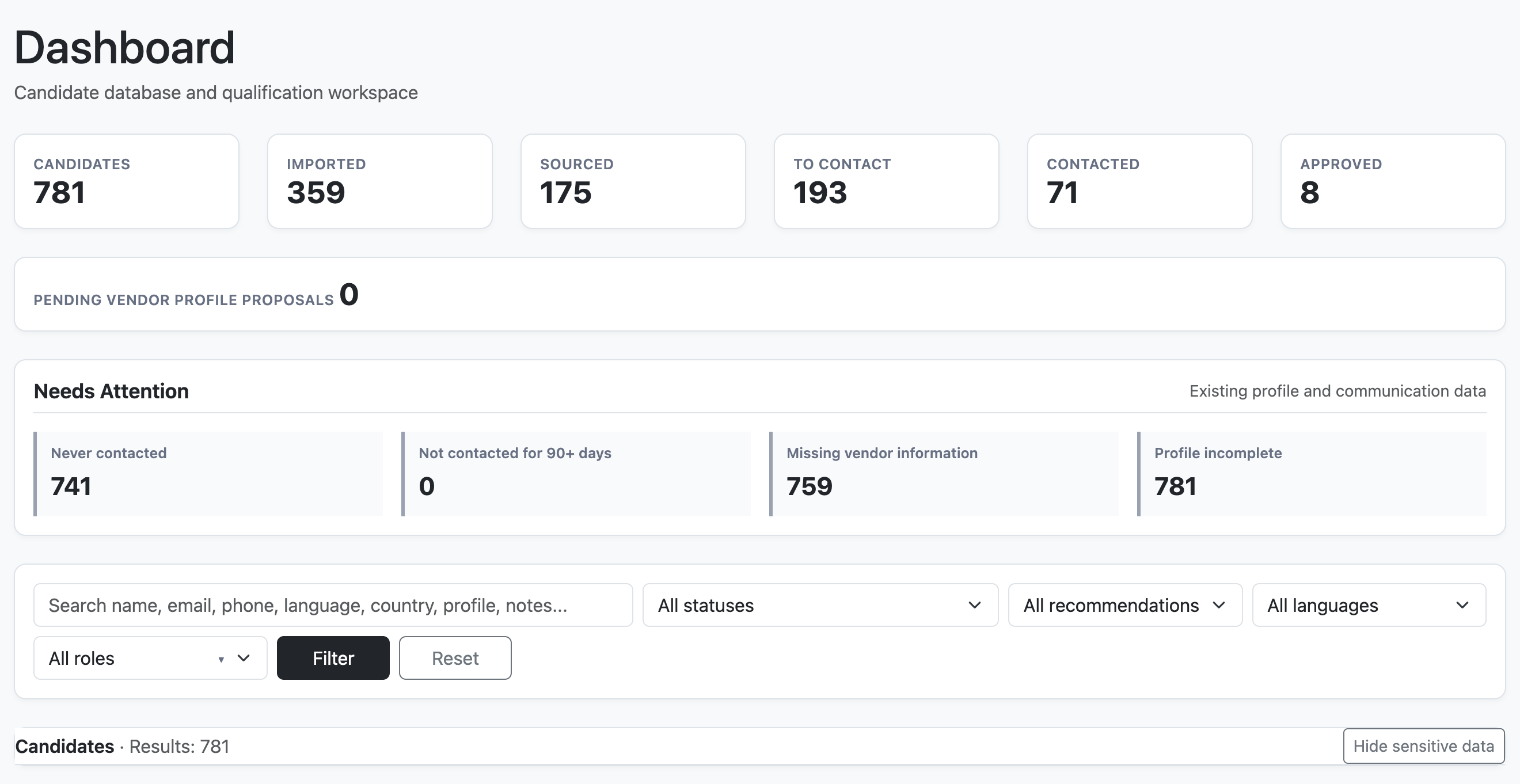
The dashboard provides an operational overview of the linguist database, status stages and information that needs attention.
From a candidate database to an operational workflow
The first version was a structured candidate database. It brought information previously spread across CVs, messages, spreadsheets and notes into one place. Once the platform entered day-to-day use, the more important requirements became clearer.
We added structured profiles for translators, interpreters, project managers and vendor managers; language combinations; specialisations such as medical, financial and technical work; CAT tools and professional technology; candidate status; review fields; and clear next actions. The platform also helps the team normalise controlled roles, identify duplicates and preserve useful historical information without treating every profile as identical.
These are not features for their own sake. They answer practical questions: what does this professional do, in which language combinations, for what kind of work, what information still needs review, and what should happen next?
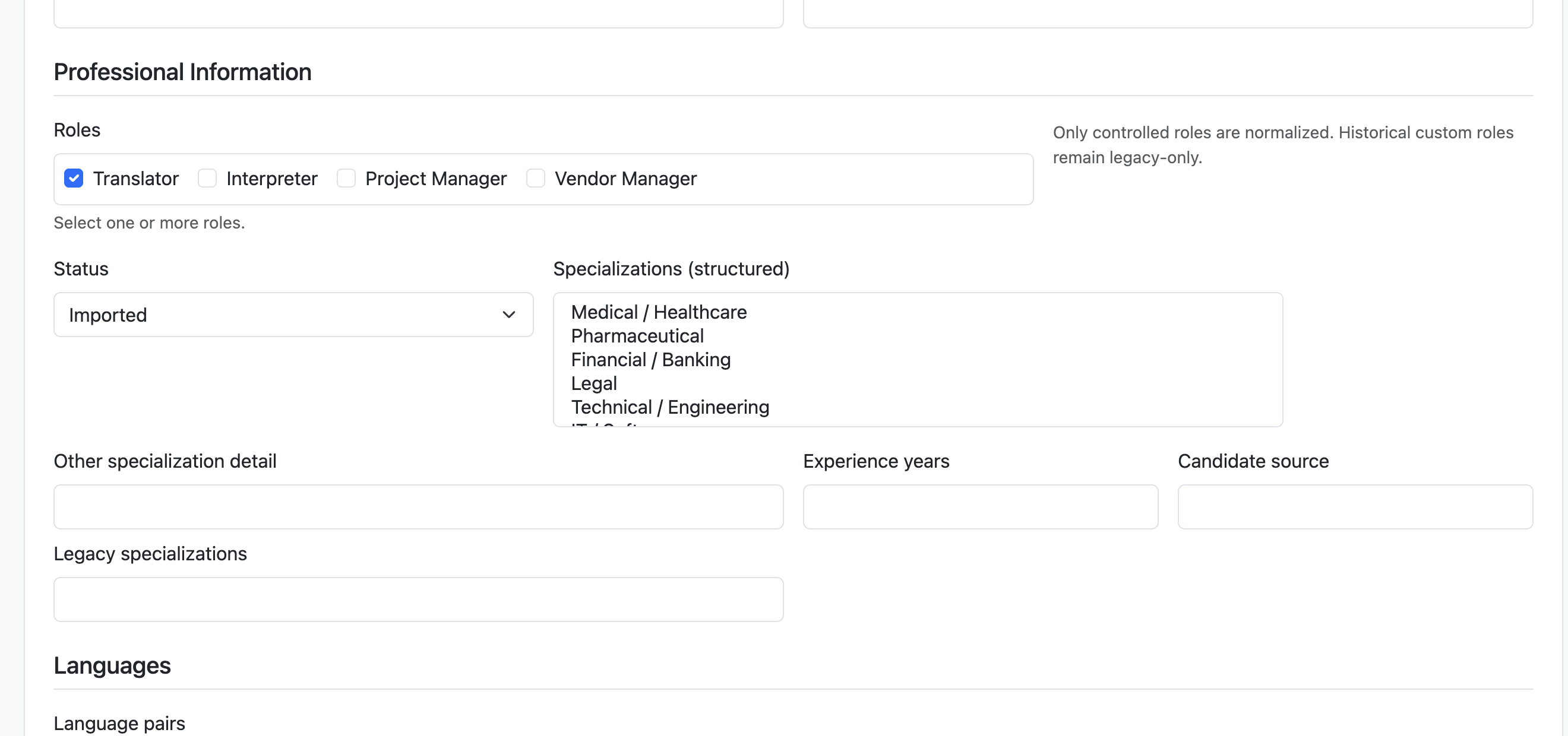
Structured profiles bring professional roles, status, specialisations and language information into a consistent working view.
Communication is part of the workflow
Vendor management is not only about storing profiles. It also depends on consistent, traceable communication. We built reusable email templates into the system to help the team prepare standardised outreach for potential translators, interpreters and other professionals.
Messages can be prepared and sent from within the workflow, with the relevant contact recorded against the candidate record. After successful delivery, the workflow can update candidate status and preserve the associated communication and activity history. Replies, follow-ups and next actions remain part of the working record.
The aim is not mass-email automation. It is to reduce repetitive manual work while maintaining a clear, accountable record of candidate and vendor communication.
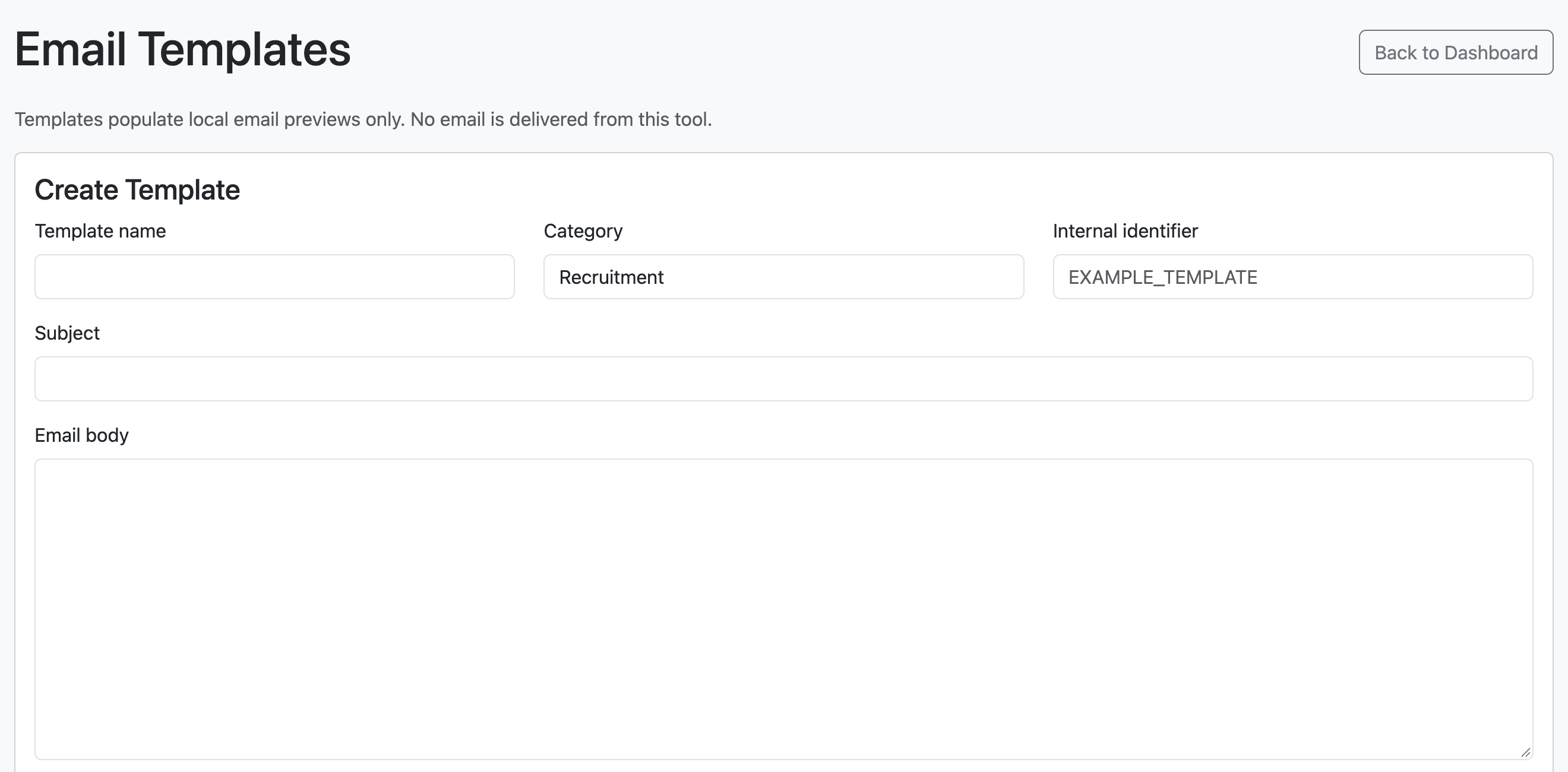
Reusable templates support consistent outreach preparation while communication remains connected to the candidate workflow.
Human review remains central
AI has helped us develop the platform faster: reviewing code, troubleshooting, improving workflows, structuring information and testing changes. It can help the team work with large amounts of professional information, but this is not AI recruitment.
Human reviewers still evaluate linguists and make professional decisions. Translation and interpreting require judgment about language ability, specialisation, reliability, communication and context. The platform is there to give the people doing vendor management better information and better tools.
Operational discipline and privacy
Because the platform holds professional and vendor information, we treat it as production infrastructure. Our operating practices include controlled access, backups, deployment checks, testing, monitoring and production troubleshooting. We also limit exposure of personal information and keep privacy considerations in view when designing workflows and publishing examples of the system.
Those practices support the same emphasis on controlled information and review that underpins CauLingo’s quality approach.
What comes next
The platform is not a finished HR product. It is part of CauLingo’s operational infrastructure, and it will continue to evolve around the needs of a translation company: finding suitable linguists, maintaining accurate professional information, managing communication and reducing unnecessary administrative work.
That matters for the teams supporting multilingual work, including interpretation services, specialist translation and localization projects. The goal remains straightforward: better information, better workflows and better decisions.
Need language support for a multilingual project? Tell us about your languages, content type and timeline.